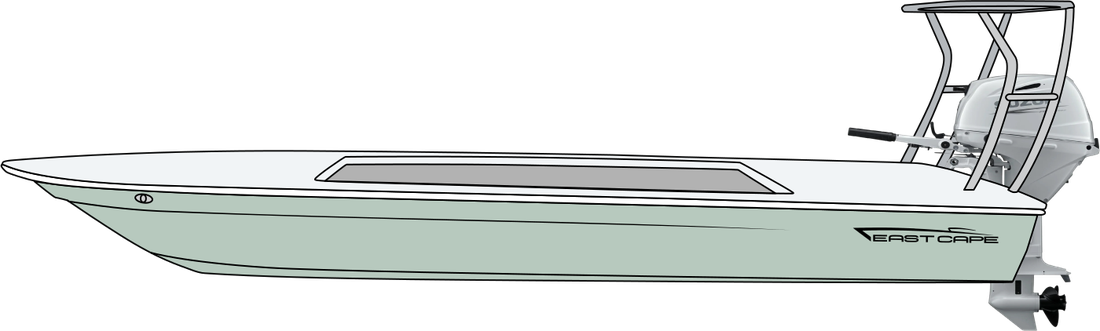
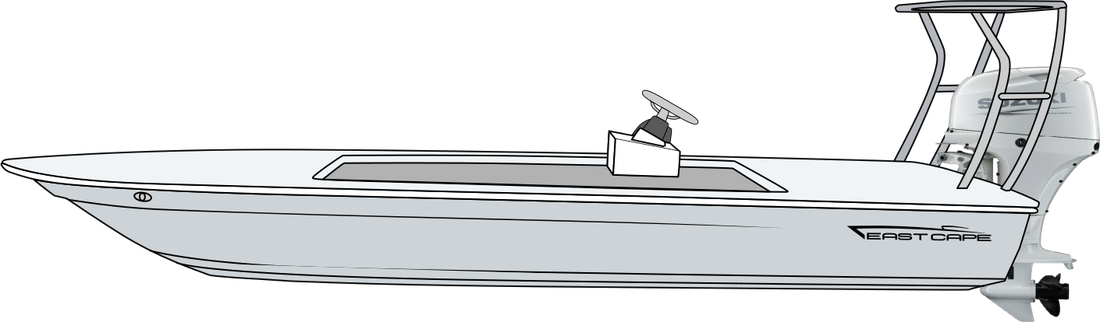
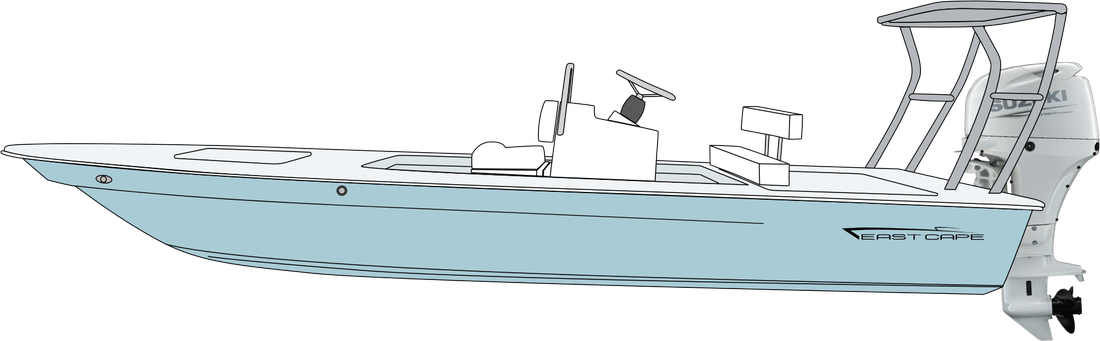
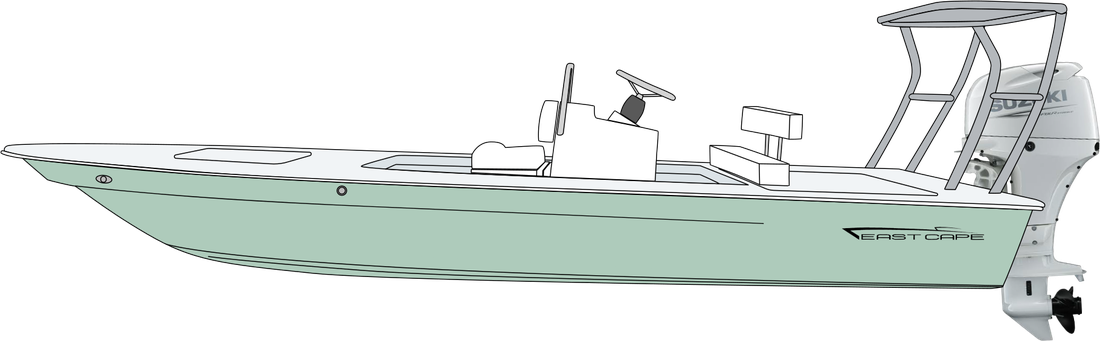
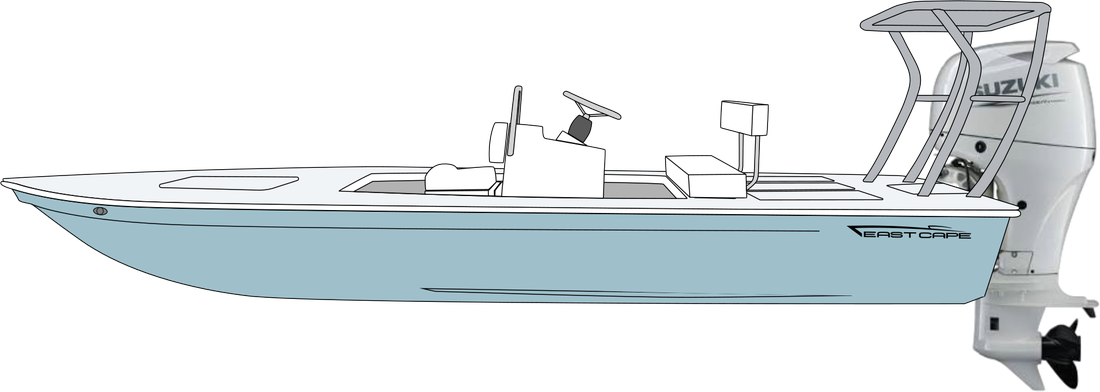
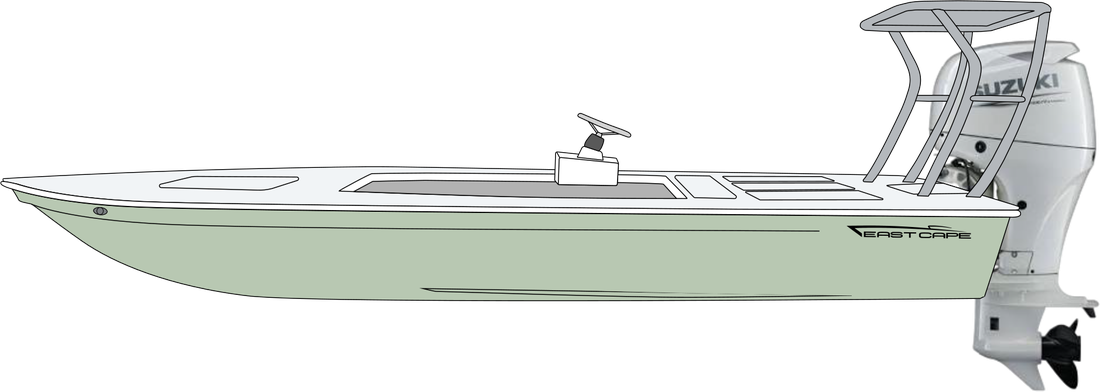
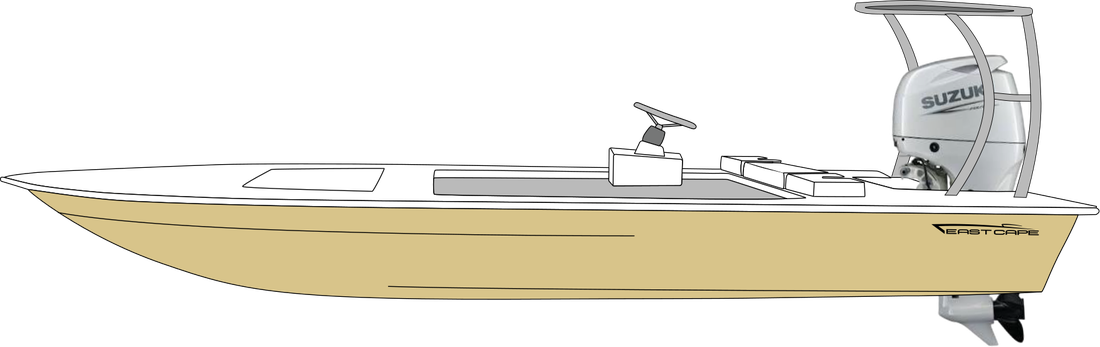
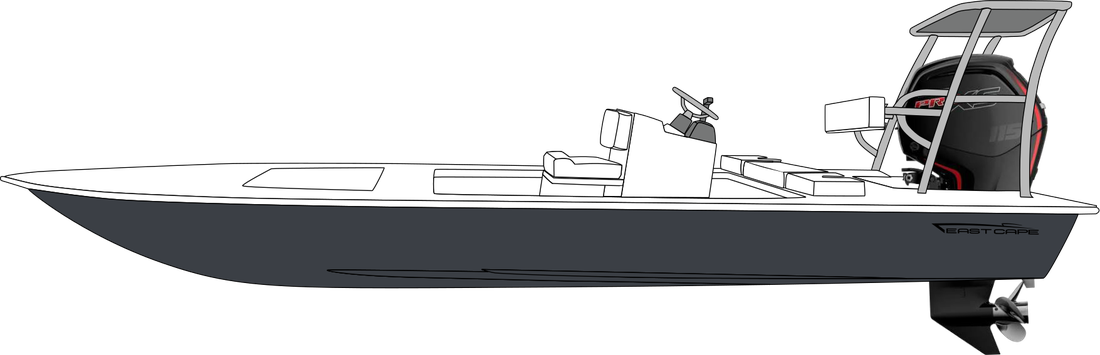
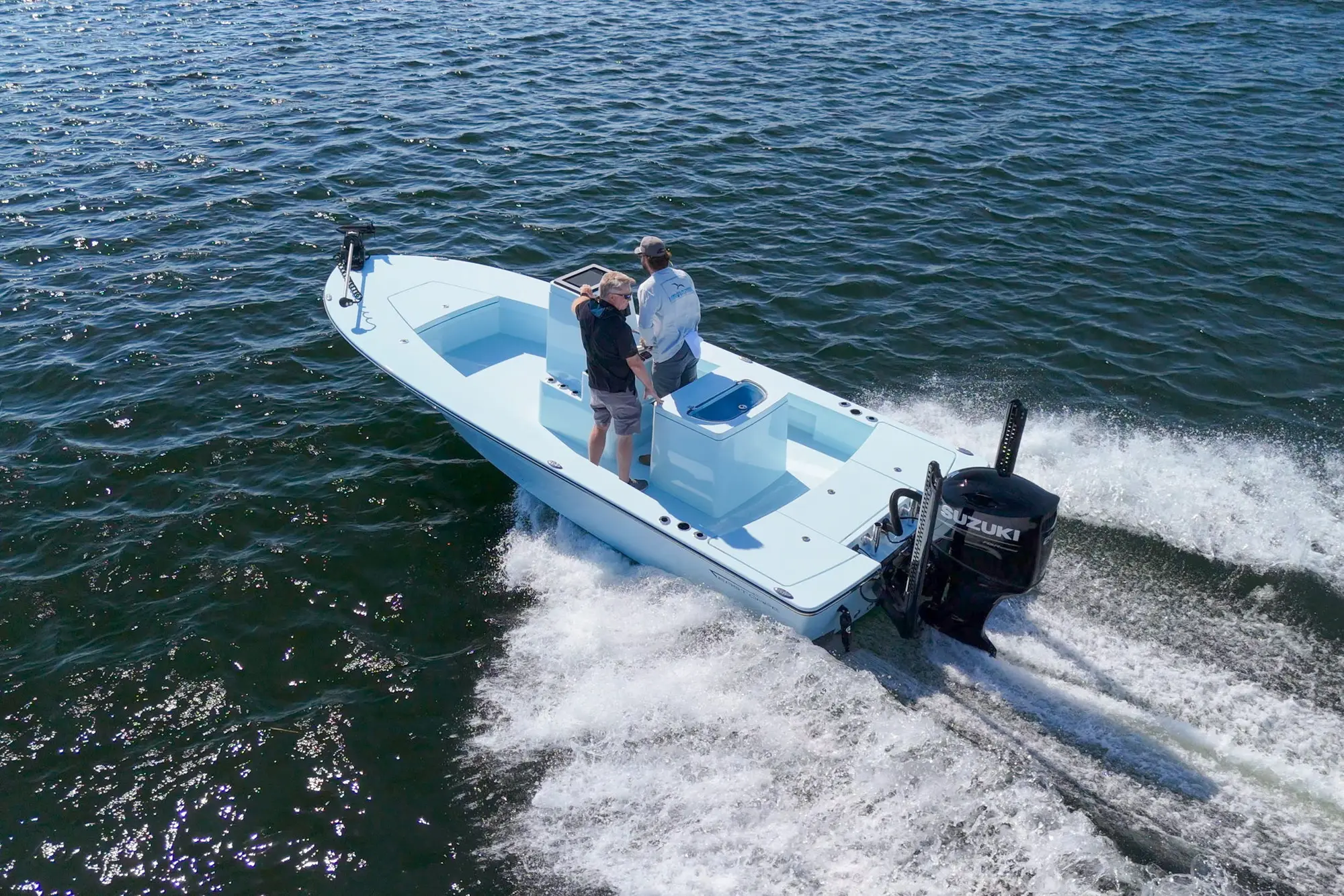
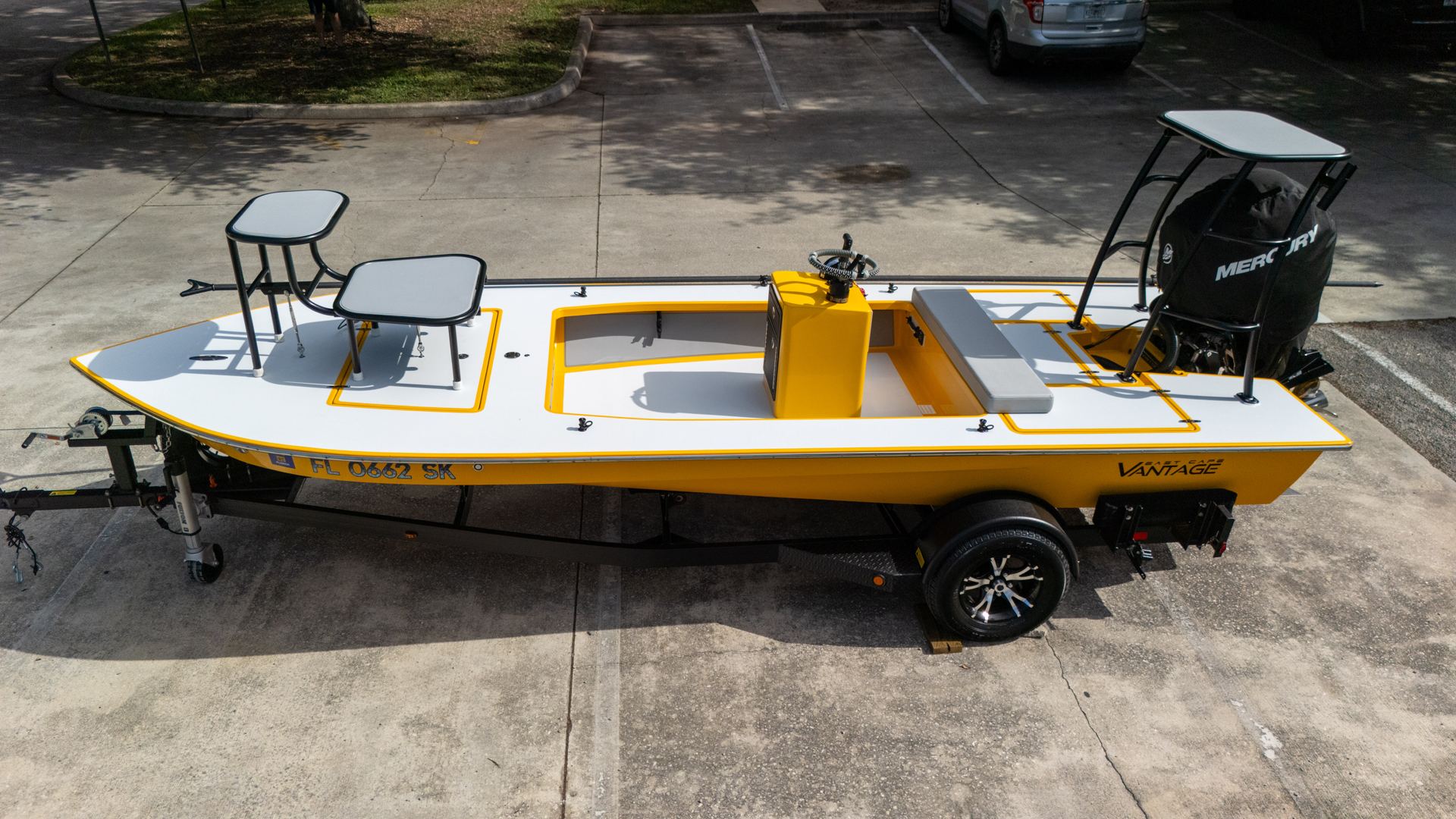
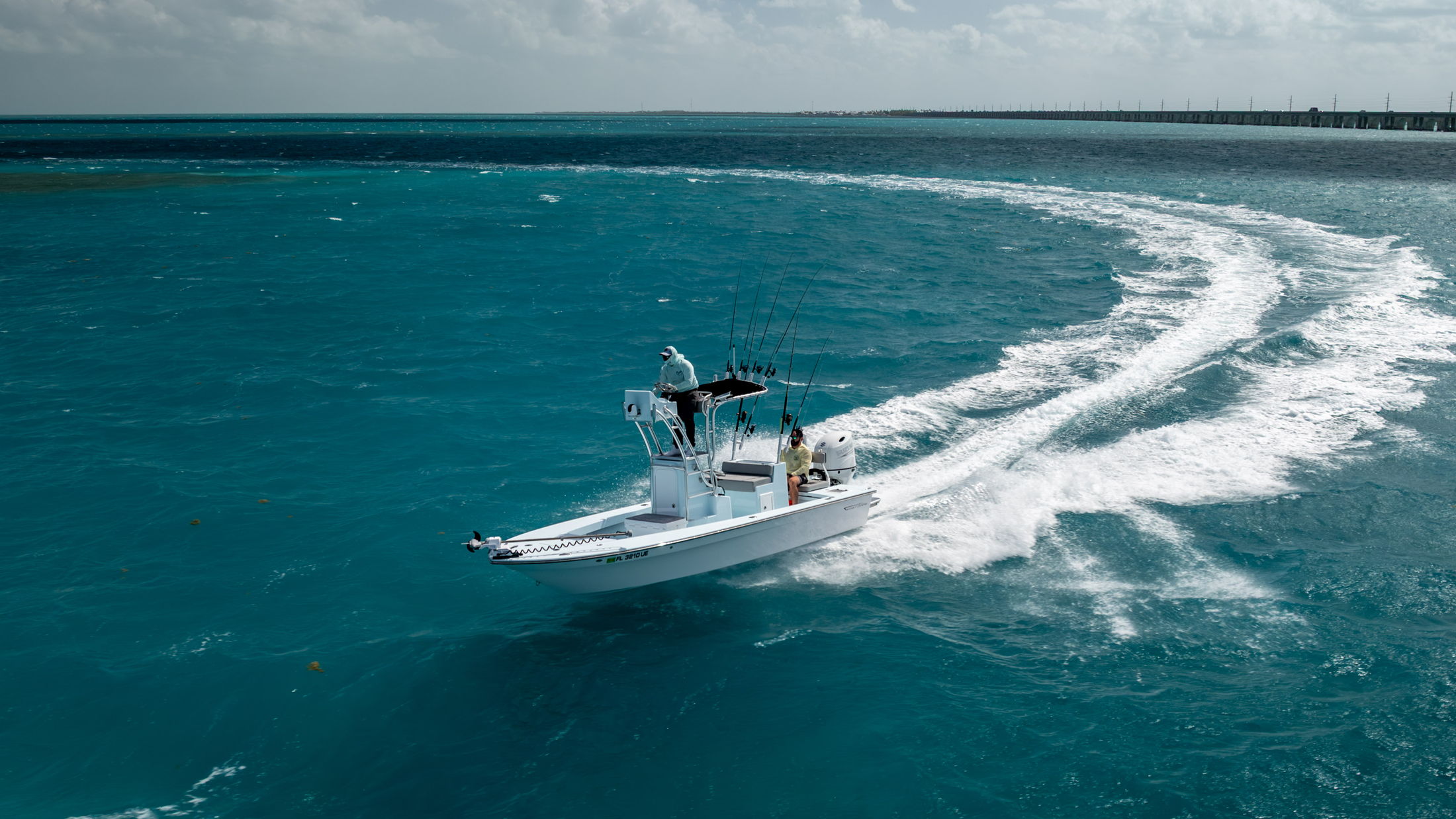
What to look for in a custom boat.
A custom boat is a real purchase — six figures, months to build, twenty years of ownership. This guide walks you through it like a friend in the industry would: the words decoded, the six things worth judging every builder on, and an honest look at how the category compares. And it runs the whole lineup — technical skiffs through the 21 and the 25s.
Start with how you fish. Not with a spec sheet.
Every question in this guide gets easier once you know your water. Most first-time buyers fit one of these four profiles — and each one changes what "the right boat" means.
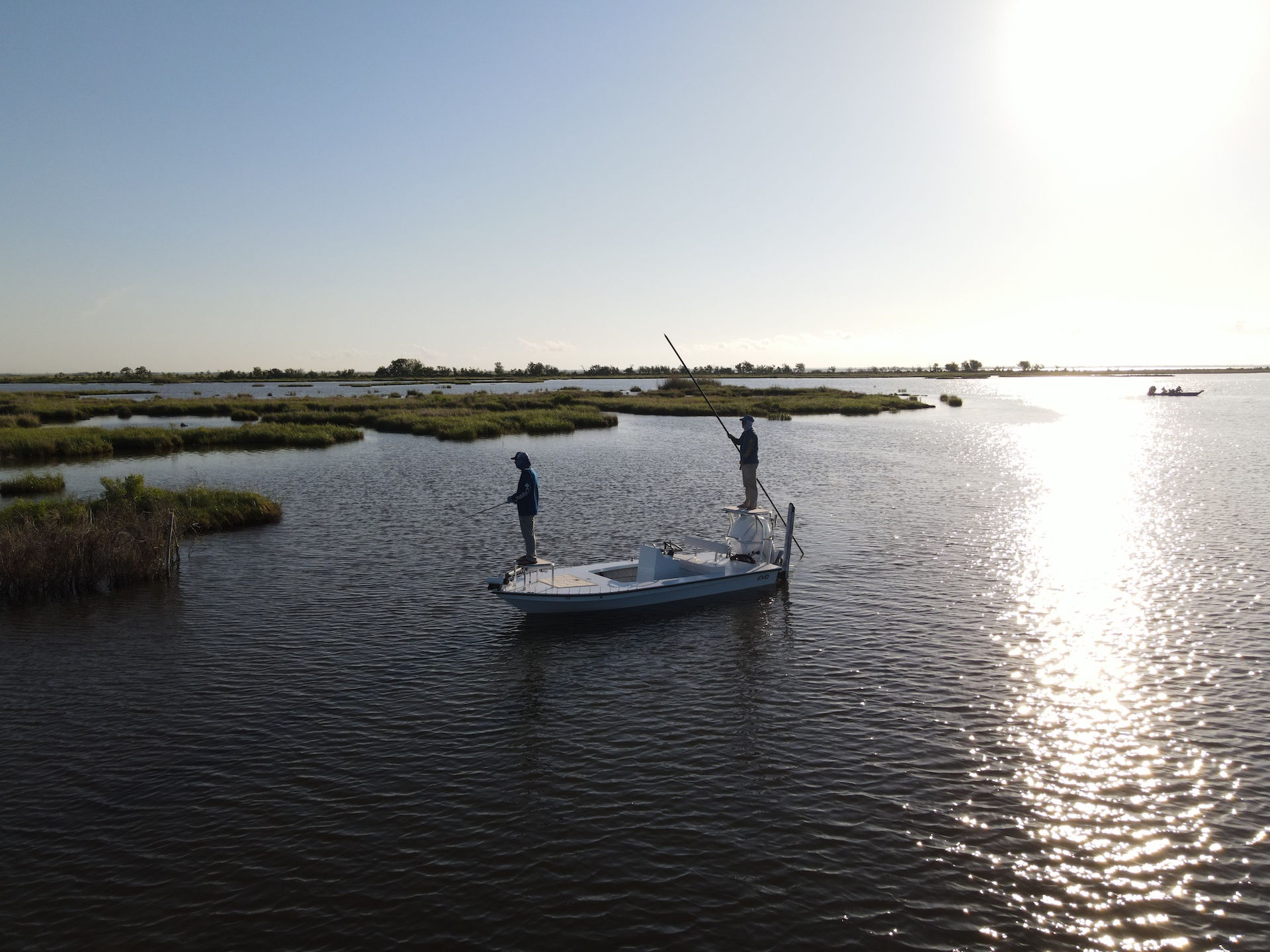
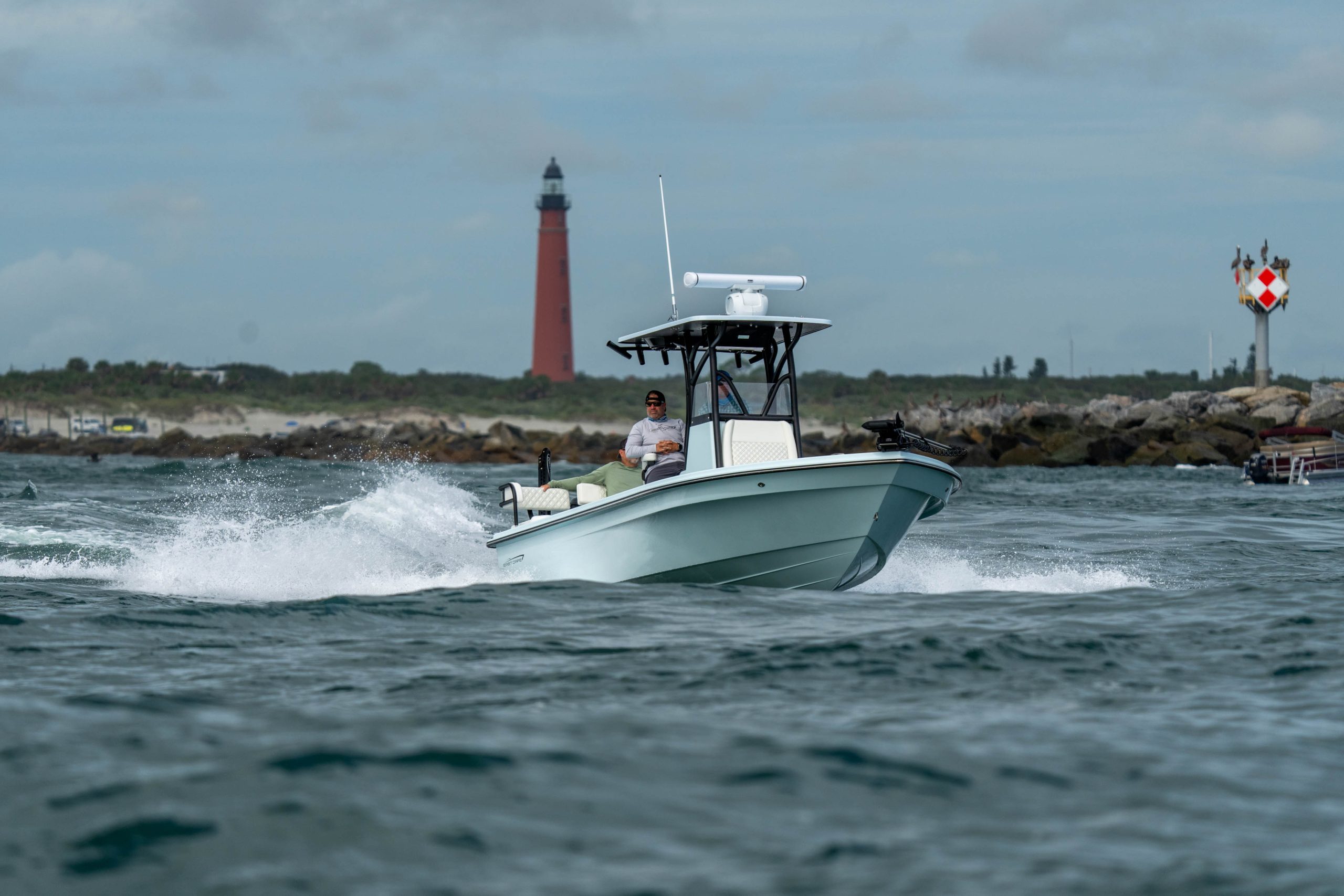
Skinny Water
You want to pole silent flats other boats can't reach.
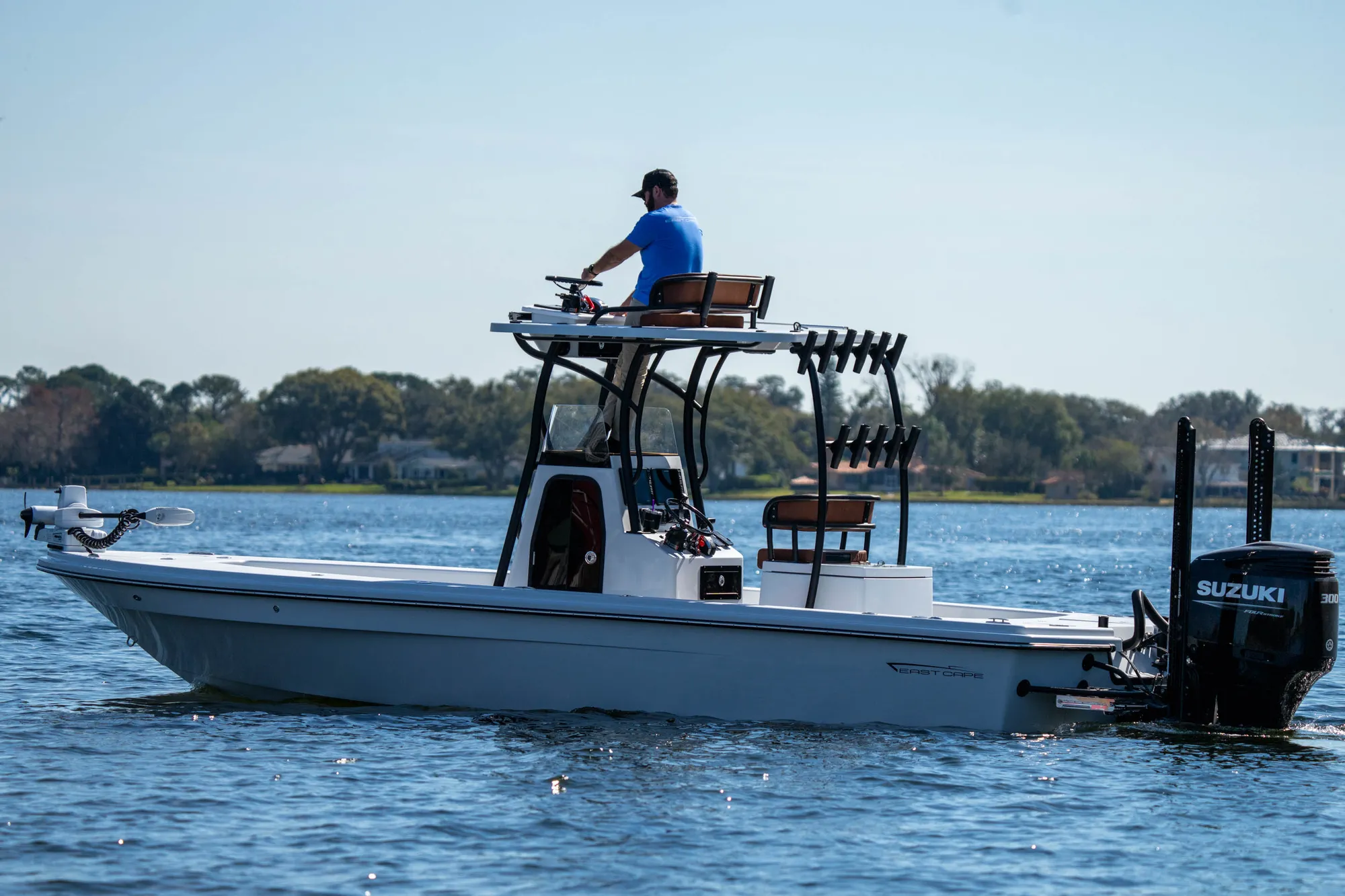
Open Water
Bays, passes, and the occasional offshore run.
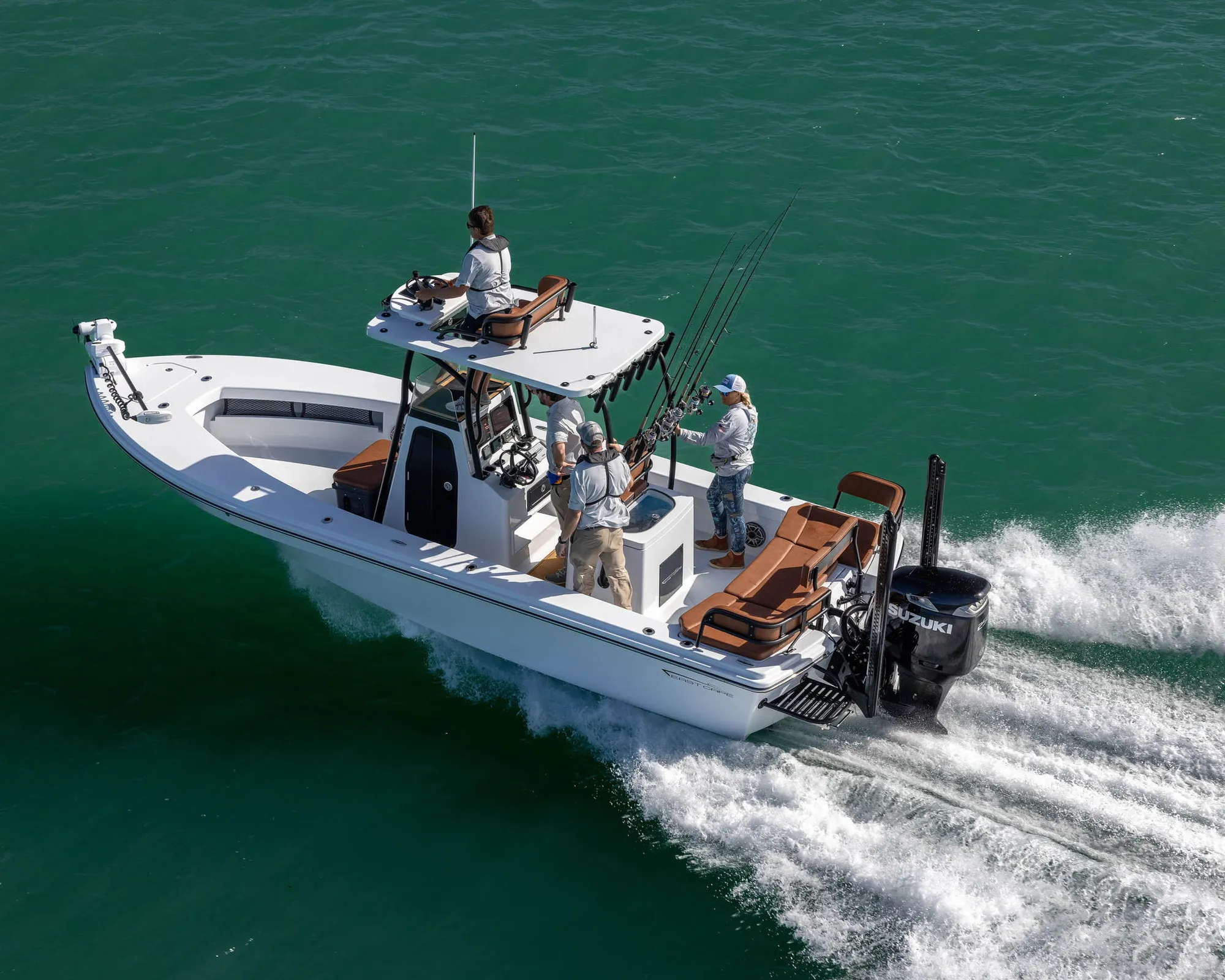
Guide / Lodge
The boat is your office. Durability and support win.
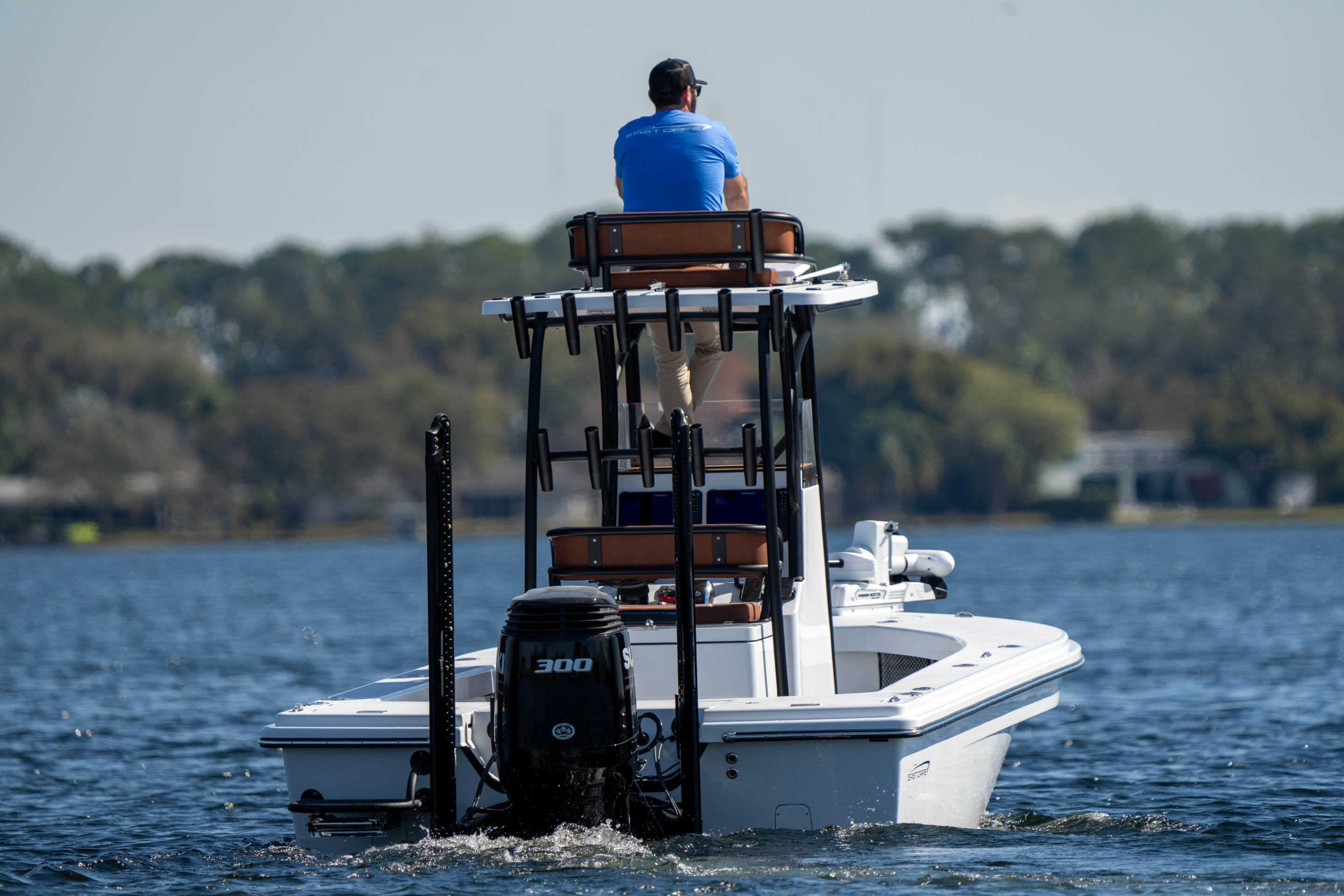
Family + Fishing
Flats on Saturday, sandbar on Sunday. One boat does both.
Six terms every seller will use. In plain English.
How much water the boat needs to float and run. A 5″ draft fishes flats a 14″ boat never sees. The single most-quoted number in the category — always ask if it's measured loaded or empty.
Standing on a raised platform and pushing the boat silently with a long pole to stalk fish in shallow water. Lighter boats pole easier and quieter — weight matters more than horsepower here.
A recessed channel that feeds water to the prop so the engine can sit higher. Translation: the boat runs even shallower. East Cape offers a Tunnel Package on its X-hulls.
Resin drawn through the laminate under vacuum pressure instead of laid by hand. Lighter, stronger, more consistent — the construction method serious builders use.
A skiff engineered around one job — getting to fish in inches of water without spooking them. Different from a bay boat, which trades some shallow ability for rough-water comfort.
Boat, Motor, Trailer — the full package price. The number that actually matters when comparing builders, because "starting at" prices often exclude all three.
Construction method
You can't see the difference at the dock. You feel it after year five — in weight, in stiffness, and in how the hull holds up to saltwater pounding.
Vacuum-infused composite. Hand-laid hulls are cheaper to produce but heavier, less consistent, and don't hold up over the long haul. Any serious builder uses vacuum infusion.
Vacuum infusion since 2004 — we've never built a hull any other way. Optional carbon and Kevlar reinforcement on every model.
Weight & draft
Light enough to pole quietly. Shallow enough to get where the fish are. These two numbers decide what water you can fish — and they're the easiest for a builder to fudge.
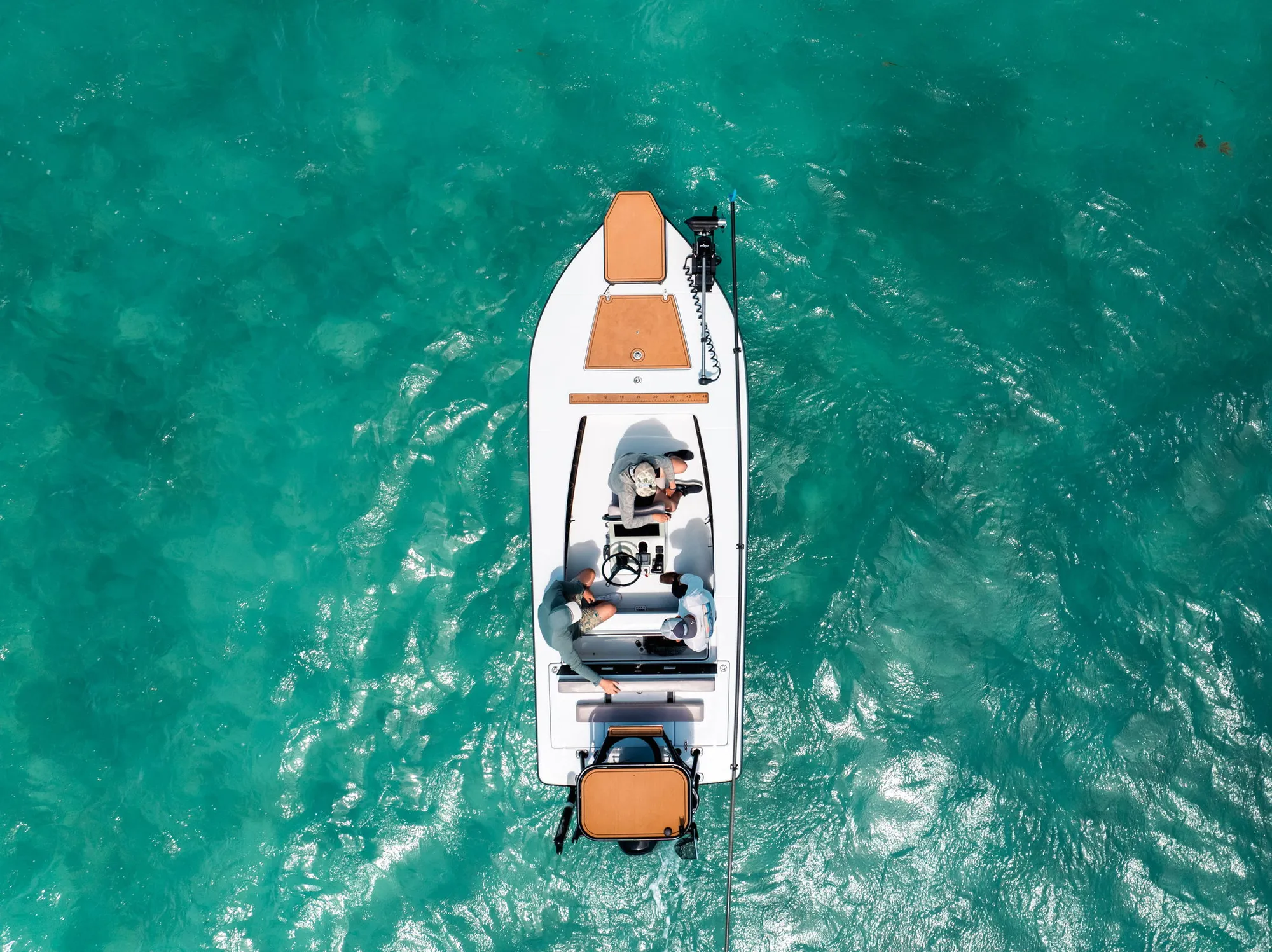
Top-tier flats skiffs come in around 400–700 lbs unrigged depending on length, with running drafts of 4–8 inches.
The 17 EVO X Lite runs 3–5″ with the Tunnel Package; the 17 EVO V sits at 5.5–7.5″. The 19 Vantage is widely regarded as one of the driest boats in its class. Every model has a published draft and capacity — no fudged numbers.
Build time & personalization
"Custom" is the most abused word in the category. The build timeline usually tells you the truth about how custom the boat really is.
A custom boat takes time. Builders pushing 3-week delivery are usually pulling a finished hull off a shelf and rigging it. A genuinely personalized build runs 90–180 days from deposit to delivery.
Every East Cape is built one at a time, fully personalized to the owner. We don't quote artificially short build times — we tell you the real one. Same ownership, same hands, since 2004. Over 1,700 boats built.
Ownership tenure & legacy
The company that supports your boat in 2035 should be the same company that built it. This is the criterion nobody checks — and the one that bites hardest.
The industry has plenty of brands that've been sold, restructured, or merged. Look for continuous ownership, not just brand age.
Same ownership since 2004. The founder is still here. Many of the team have been here since the early days.
Pricing transparency
Two builders can quote you "$50K" and mean completely different boats. What's in the base price is the question that separates them.
"Starting at" prices are easy to publish and almost never reflect what you'll actually pay. Watch for what's included — engine? trailer? rigging? electronics? — before comparing numbers.
Our published prices are for a ready-to-fish package — and every model page says exactly what that package includes. Most of our skiffs are priced as boat, motor, and trailer: ready to fish. The Lite models — 17 EVO V Lite at $29,500 and 17 EVO X Lite at $27,000 — are priced as boat and trailer, ready for you to choose power and options. The 25 series is priced without a trailer, because many owners keep a boat that size on a lift or a marina rack. What you see is what you pay.
The owner experience
You're not buying a hull. You're starting a 20-year relationship with the people who build and service it. Make sure you can actually reach them.
You should be able to talk to the people building your boat. You should be able to visit. The relationship doesn't end at delivery — service, refits, and parts support continue for the life of the hull.
Visit the Longwood shop any time. Talk to the team rigging your boat. Refit work on older East Capes happens with the same team that built them. Every time.
The same questions, past 20 feet.
Everything above — construction, weight, ownership, the build conversation — applies to every hull we make. What changes with the 21 and the 25s is the mission: more deadrise and draft buy you ride and range, and cost you the skinniest water. Decide by the water you actually fish, same as ever.
21 EVO
The step between skiff and offshore. Enough V to handle a bay-day chop without beating you up, shallow enough to work a 9" draft — one boat for the big bays and the calm skinny mornings.
25 Open
A tournament center console with shallow-water DNA. It cannot run skinny — and it isn't trying to. Range, rod capacity and a ride built for real open water.
25 Hybrid
The same 25 hull with seating where the Open carries deck. Fishes hard Saturday, runs the family Sunday — the honest crossover.
Weight matters more up here too — a 25-foot boat is a different towing proposition than a skiff, so check your tow vehicle's rating before you fall in love. Draft, deadrise, power and fuel below come straight from each model's spec sheet.
Side by side with the competition.
Buyers in this category typically cross-shop a small handful of builders. Here's how the four most-mentioned options compare across the same criteria we just walked through. Competitor data reflects publicly listed specs and pricing for each builder's flagship 17–18 ft model.
| Criterion | Builder APremium top-tier · Florida · ~29 yrs | Builder BPremium boutique · Florida · ~17 yrs | Builder CHigh-volume value · Florida · ~25 yrs | East CapePremium custom · Longwood, FL · 22 yrs |
|---|---|---|---|---|
| The Boat | ||||
| ConstructionHand-laid vs. vacuum-infused | Hand-laid · vacuum-bagged · Kevlar/Innegra composite | Vacuum-bagged · S-glass / Kevlar / carbon · aerospace epoxy | Vacuum-infused composite · standard hull | Vacuum-infused since 2004 · optional Carbon Series & Kevlar on every model |
| Hull optionsStandard V vs. low-deadrise vs. tunnel | Standard hull · tunnel option on select models | Single hull profile · no tunnel option | Standard hull · semi-tunnel on select models | V-hull, 2° low-deadrise X-hull, optional Tunnel Package on X-hulls |
| Draft (17–18 ft class)Running draft, comparable model | ~4–6″ · lightest model published 3.5″ | ~6″ · single hull profile | ~5–6″ with semi-tunnel option | 3–5″ with Tunnel Package · 17 EVO X Lite, X-hull config |
| Dryness / rideCalm bays + light chop | Strong dry-ride reputation · sponson design | Strong dry-ride reputation · flat bottom planes early | Flared-bow design · solid for the price tier | 19 Vantage widely regarded as one of the driest in class · all models published spec'd |
| Open-water lineupNearshore + offshore models | Larger bay-boat platforms in the lineup | Flats-skiff focus · no offshore platforms | Bay-boat & light offshore models in lineup | 21 EVO nearshore · 25 Open + 25 Hybrid for true offshore |
| The Build | ||||
| Build timeDeposit to delivery | ~3–6 months | ~6–12 months · limited build slots | ~2–4 months | ~3–6 months · personalized to each owner |
| PersonalizationConfigurable vs. fully custom | Full configurator · selectable options | Fully custom · low volume | Configurable · semi-custom | Fully personalized · no two alike · direct shop access during build |
| Customer voice in buildWho you talk to during construction | Through sales rep | Direct to founder/team | Through dealer network | Direct to the team building your boat |
| The Investment | ||||
| Starting price17–18 ft model, base config | ~$52K · pre-options, skiff-only | ~$109K+ · pre-options | ~$35–42K · pre-options | $42–53K full package: boat + engine + trailer + rigging |
| What's in the base priceEngine? Trailer? Rigging? | Hull only · engine + trailer extra | Hull only · engine + trailer extra | Hull only · varies by dealer | Full package in one price |
| Top of lineupPremium build, fully optioned | ~$110K+ fully optioned | ~$150K+ · Legacy or 21 ft | ~$70–80K fully optioned | $189K — 25 Hybrid fully built |
| The Business | ||||
| Ownership continuityYears under current owner | Ownership change in 2007 · original founders departed | Founder still active · ~17 yrs same ownership | Continuous ownership | Same ownership since 2004 — founder still active |
| WarrantyHull warranty term | Limited lifetime hull | Limited lifetime hull | Limited lifetime hull | Limited lifetime hull · service in the same shop that built it |
| Service & refitWhere older boats get worked on | In-house service center | In-house | Dealer network | In-house · same team · every refit happens in Longwood |
Competitor data reflects publicly listed specs, manufacturer-published information, and recent industry coverage as of June 2026. Specs and pricing vary by model, year, configuration, and options. Builder labels are anonymized to keep the focus on category-level comparison. This matrix is a starting point — direct quotes and demos from each builder are the right way to make a final decision.
The gear a builder specs tells you plenty.
Every brand here is on our boats because it survives the way our owners fish. Ask any builder what they rig and why — the answer is buying information.
 TrailersCustom aluminum trailers.Visit AmeraTrail →
 Push polesCarbon push poles and skiff accessories.Visit Carbon Marine →
 TrailersGalvanized and aluminum trailers.Visit Continental →
 ElectronicsPlotters, CHIRP and imaging at the helm.Visit Garmin →
 OutboardsBF tillers and remotes for the Lite line.Visit Honda →
 ElectronicsProven fish-finding electronics.Visit Lowrance →
 PlatformsCarbon casting platforms and push poles.Visit Marquesa Marine →
 OutboardsFrom the 30 tiller on the Lites to the 400 Verado — spec'd to the hull.Visit Mercury →
 Shallow waterMicro to the 10' Blade, plus the Move trolling motor.Visit Power-Pole →
 Shallow waterThe bow mount our big trolling-motor rigs ride on.Visit Power Pux →
 DeckCustom-routed, custom-colored deck pads.Visit SeaDek →
 ElectronicsNavigation and radar-ready helms.Visit Simrad →StiffyPush polesComposite push poles, sized to the skiff.Visit Stiffy →
 OutboardsStandard-package power on most of the lineup.Visit Suzuki →TohatsuOutboardsThe 40 tiller — a Lite-line staple.Visit Tohatsu →TurtleboxGearRugged speakers — a fixture at our events and giveaways.Visit Turtlebox →
 HardwarePush-pole holders and skiff hardware.Visit V-Marine →
 OutboardsTillers for the Lites through the 300.Visit Yamaha →
First-boat questions, answered.
What should I look for when buying a custom boat?
What is draft, and why does everyone lead with it?
What is a tunnel hull?
How long should a custom build take?
Why does the builder's ownership history matter?
What should be included in the published price?
The final test is the water.
You've seen the criteria and the matrix. Visit the Longwood shop, talk to the team, and we'll set up a demo on the model that fits your fishing.
Start Your BuildVisit the Shop